



The Difference Between a Safety Advisor and a Safety Consultant
Many contractors hear the terms “Safety Advisor” and “Safety Consultant” used interchangeably, but they are not always the same thing.
Understanding the difference is important because choosing the wrong level of support can affect your legal compliance, accreditation success, and ability to win contracts.
What Is a Safety Advisor?
A Safety Advisor is typically an external consultant who provides health and safety support and advice when needed.
This service is often suited to:
- Sole traders
- Small contractors
- Businesses with 4 employees or less
- Companies with lower-risk activities
The key point is that a professional Safety Advisor should hold recognised health and safety qualifications such as:
- NEBOSH
- IOSH
These qualifications demonstrate competence in health and safety management, not just practical construction experience.
A Safety Advisor service usually includes:
- Health & safety advice
- Support with risk assessments
- RAMS preparation
- Basic compliance guidance
- Assistance with contractor requirements
- A service agreement
- A competency certificate
- Consultant CV and qualifications
For smaller businesses, this is often a flexible and cost effective way to access competent advice without employing a full time health and safety professional.
In many cases, support is provided on an as needed basis rather than through a monthly retainer.
What Is a Safety Consultant?
A Safety Consultant has a more formal legal role within a business.
Under UK health and safety legislation, businesses with more than five employees are generally expected to appoint someone who is competent in health and safety management.
Importantly, this does not simply mean someone who is experienced on site.
A site manager or supervisor may be highly competent at running construction work but may not be competent in managing the company’s health and safety systems unless they also hold recognised qualifications such as NEBOSH or IOSH.
A Safety Consultant service is usually more comprehensive and ongoing.
This type of support commonly includes:
- Monthly retained support
- Full Health & Safety Management System
- Health & Safety Policy
- Staff handbook
- Equal opportunities policy
- Ongoing compliance advice
- Accident and incident support
- Updates to documentation
- Liaison with the HSE if required
- Ongoing business support as the company grows
In many cases, the consultant effectively becomes an extension of the business and should be informed about changes within the organisation, including:
- New work activities
- Additional employees
- New equipment
- New premises
- Higher-risk projects
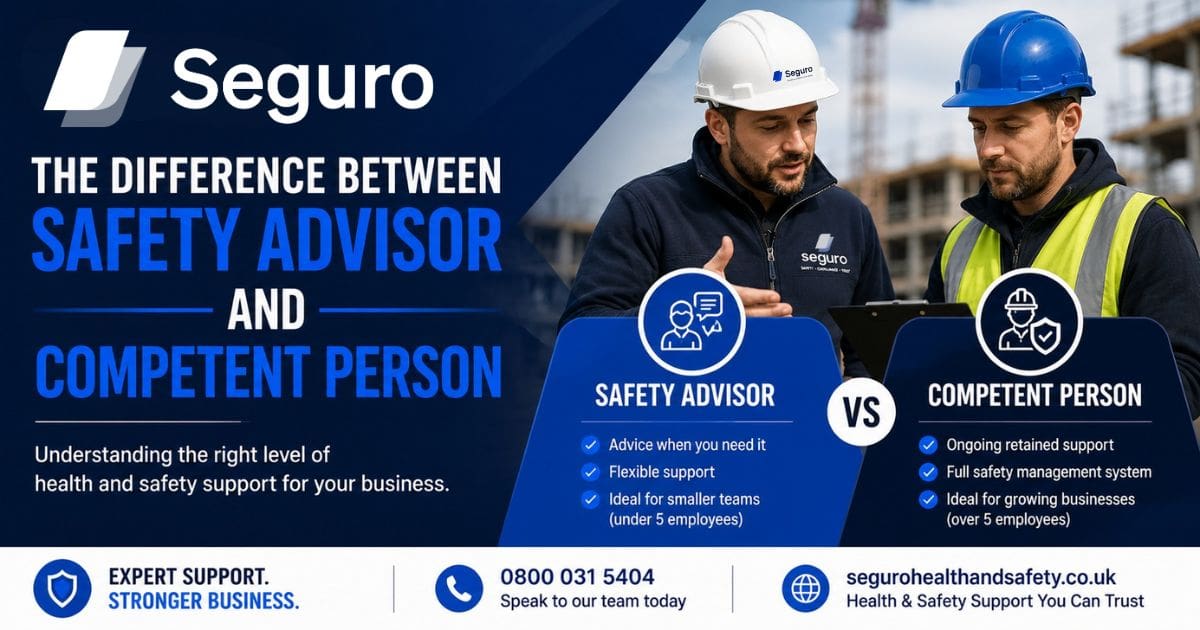
The Main Difference
The main difference between the two services is the level of ongoing involvement and legal responsibility. To keep this simple, think of it like this:
4 employees or less = Safety Advisor
Typically:
- Flexible support
- Lower-cost option
- Suitable for smaller businesses
- Advice when needed
- Less ongoing involvement
More than 5 employees = Competent Person
Typically:
- Ongoing retained support
- More comprehensive compliance management
- Suitable for growing businesses
- Full management systems
- Regular involvement in company operations
Why This Matters
Clients, principal contractors, and accreditation schemes increasingly ask contractors to demonstrate they have competent health and safety support in place.
Even businesses with fewer than five employees may still need:
- A formal Health & Safety Policy
- Professional advice
- Dedicated support arrangements, especially when working for larger contractors or public sector clients.
This is why there is no absolute “one size fits all” rule.
Some small businesses need only occasional support, while others require a more structured compliance system to meet client expectations.
Choosing the Right Support
The right level of support depends on:
- Number of employees
- Type of work carried out
- Risk profile
- Client requirements
- Accreditation goals
- Business growth plans
For many contractors, getting the right support early helps:
- Improve compliance
- Reduce stress
- Strengthen accreditation applications
- Improve organisation
- Win more work
If you are unsure which level of support your business requires, professional advice can help clarify your legal duties and ensure your systems are appropriate for your business size and activities.
For guidance on your specific circumstances, Seguro Health & Safety can help review your requirements and recommend the most suitable level of support.


Frequently Asked Questions
What is the difference between a Safety Advisor and a Competent Person?
A Safety Advisor usually provides health and safety advice and support when needed, often for smaller businesses. A Competent Person has a more formal role in helping the business manage health and safety duties and should have suitable health and safety knowledge, experience and qualifications such as NEBOSH or IOSH.”
Do I legally need a Competent Person for health and safety?
Employers must have access to competent health and safety assistance. This may be provided by someone inside the business with suitable competence or by an external Safety Advisor or health and safety consultant.
Can a site manager be the Competent Person?
A site manager may be competent at running construction work, but this does not automatically mean they are competent in health and safety management. To act as the Competent Person, they should have suitable health and safety knowledge, experience and recognised qualifications.
What qualifications should a Safety Advisor have?
A professional Safety Advisor should normally hold recognised health and safety qualifications such as NEBOSH or IOSH. These qualifications help demonstrate competence in health and safety management and compliance support.
Do businesses with fewer than 5 employees need a Safety Advisor?
Businesses with fewer than 5 employees may still need health and safety advice, especially if clients request proof of competent support, RAMS, policies or accreditation evidence. A Safety Advisor service can provide flexible support when required.
What health and safety support is needed for businesses with more than 5 employees?
Businesses with more than 5 employees generally need more structured health and safety support, including a written Health and Safety Policy, risk assessments, ongoing competent advice and a suitable safety management system.
What does a Competent Person service include?
A Competent Person service may include ongoing retained support, a full health and safety management system, health and safety policy, staff handbook, risk assessment support, RAMS guidance, accident support, legal updates and liaison with the HSE if required.
What does a Safety Advisor service include?
A Safety Advisor service may include health and safety advice, a service agreement, certificate of support, consultant CV and qualifications, and assistance with documents such as risk assessments, RAMS and contractor compliance paperwork when needed.
Can a client ask for proof of competent health and safety support?
Yes. Clients, main contractors and accreditation schemes may ask for evidence that your business has access to competent health and safety support, even if you have fewer than 5 employees.
How do I know whether I need a Safety Advisor or Competent Person?
The right support depends on your number of employees, type of work, risk level, client requirements and accreditation goals. Smaller businesses may need flexible Safety Advisor support, while growing businesses or those with more than 5 employees may need ongoing Competent Person support.